

Our body has a tremendous biological intelligence when it comes to repairing and renewing itself. The rapid closing of a wound on our skin or the healing of damaged tissues over time occurs thanks to the restorative cells within the blood circulating in our veins. However, advancing age, environmental factors, stress, and genetic predispositions accelerate hair loss while overshadowing that natural, radiant, and fresh structure of our skin. Today’s medical aesthetic world is now focusing on a completely natural and revolutionary cellular renewal method that awakens the body’s own healing power rather than injecting foreign chemicals or artificial substances from the outside: PRP Treatment (Platelet Rich Plasma).
In our clinic located at Kartal Bumerang Residence, the health and aesthetic base of the Anatolian Side of Istanbul; we offer our clients coming from all over the metropolis, especially Pendik, Maltepe, Ataşehir, Kadıköy, and Tuzla, the opportunity to rejuvenate with the power of their own cells. In this comprehensive guide, prepared with the medical experience and sterilization standards originating from the Gülhane Military Medical Academy (GATA) discipline; we transparently examine all the most curious details, from the action mechanism of skin and hair PRP treatment to the application processes, from choosing the right doctor to the dynamics of Istanbul PRP prices.
What is PRP Treatment and How Does It Work in the Field of Medical Aesthetics?
PRP is the process of extracting a small amount of blood from a person’s own vein, separating it by spinning it at high speeds in special centrifuge devices, and re-injecting the obtained “platelet-enriched” yellow plasma back into the same person.
Platelets are anucleate blood cells that densely contain “growth factors,” which provide coagulation in our blood and play a leading role in tissue repair. Under normal conditions, there are on average around 200,000 platelets per cubic millimeter in our blood, while with a qualified PRP separation process, this number is increased to over 1 million per cubic millimeter. When this concentrated “youth elixir” is injected into damaged or aged tissue, it acts almost like a stem cell logic, awakening dormant cells, triggering the production of new collagen and elastin fibers, and increasing vascularization (angiogenesis) to ensure deep nourishment of the tissue.
The main reason why this treatment is so popular in the field of medical aesthetics is that the risk of allergy, rejection, or infectious disease is “zero” because it is obtained entirely from the patient’s own blood (autologous). The procedure is a practice that is completely at peace with the body, accelerating its self-repair process under clinical conditions without the need for a laboratory environment.
To Whom and How is Hair and Skin PRP Application Performed?
PRP has an extremely wide range of uses in both revitalizing hair follicles and restructuring the skin. The treatment is applied with special techniques depending on the targeted area.
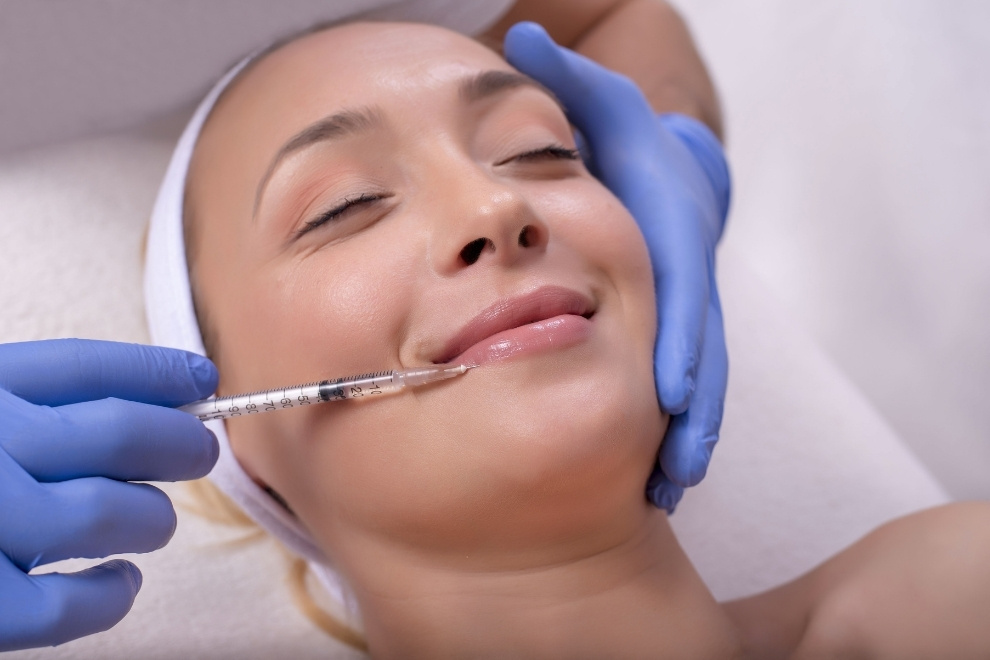
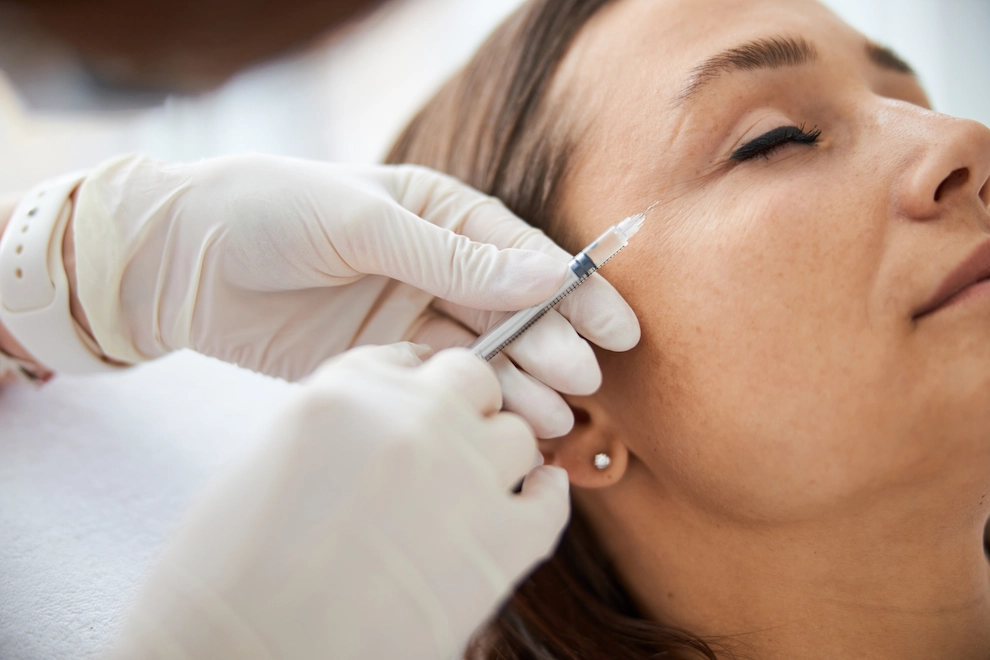
- Skin PRP Application (Vampire Facial): It is applied to increase skin quality in areas where signs of aging are most visible, such as the face, neck, décolleté, and the back of the hands. It aims to smooth out fine wrinkles, lighten sun spots, repair acne scars, and restore the lost elasticity of the skin. After the skin is cleansed and numbed with a topical local anesthetic cream, the prepared PRP plasma is injected into the lower layers of the skin (dermis) using very fine (nano) mesotherapy needles. Furthermore, the plasma can be fed through micro-channels opened on the skin surface with micro-dermapen devices to maximize the effect. The influx of growth factors that occurs in the skin after the treatment initiates cellular renewal, giving the skin a bright, tight, and smooth form.
- Hair PRP Application: It is one of the most effective medical ways to save weakened, thinned, and shed hair follicles due to genetic shedding, stress, seasonal transitions, or vitamin deficiency. The dense platelets injected into the scalp stimulate the hair follicles in the resting phase (telogen) and transition them into the active growth phase (anagen). It ensures the thickening of existing hair strands, stops shedding due to cellular weakening, and increases blood circulation in the scalp. It is an indispensable supporter, especially before and after hair transplant operations, to increase the retention rate of the grafts (transplanted hair follicles).
To Whom is it Not Recommended? It is not appropriate to perform PRP on pregnant and actively breastfeeding women, those undergoing cancer treatment, those with an active infection in the application area, and individuals with severe blood coagulation (platelet) disorders. It is extremely safe for all adults except for these special conditions.
Doctors Performing PRP Treatment and the Importance of Choosing an Expert
Although PRP seems just like “drawing blood and giving it to the face or scalp” from the outside, a serious medical process lies behind it. The sole factor determining the success of this process is the person’s mastery of human anatomy and the medical standards of their clinical environment.
Drawing the blood under sterile conditions, centrifuging it at the correct speed and duration, and injecting the obtained plasma into the most efficient layer of the skin (neither too deep nor too superficial) without losing cell viability requires deep-rooted medical experience. Procedures performed by unauthorized persons in aesthetic and beauty centers using standard biochemistry blood tubes are not only illegal but also offer no benefit as they cannot provide the pure platelet separation required for tissue repair. A real and effective PRP set must contain special citrates that prevent blood coagulation and special separator gels that completely isolate the restorative cells from the red blood cells.
For this reason, while researching doctors who perform PRP treatment, you should definitely prefer clinics managed by a medical doctor who perfectly knows human tissue. In our Dr. Mustafa Eray Erkek clinic; Ministry of Health and international CE-approved single-use closed-system original PRP kits are used for each of our clients. With the surgical sterilization and medical awareness coming from the GATA tradition, the risk of infection is completely eliminated, and personalized treatment maps best suited to your tissue’s needs are created.
How are Istanbul PRP Prices Determined and Frequently Asked Questions
In medical aesthetic applications, it is not possible to share a fixed price list over the internet due to medical health regulations. Istanbul skin and hair PRP prices vary depending on the following dynamics, which are shaped entirely according to the patient’s clinical needs:
- Technology of the PRP Kit Used: This is the most important cost item. There is a wide spectrum on the market, ranging from very low-cost simple blood tubes to high-tech closed-system FDA/CE-approved kits that maximize cell density at a laboratory level. The success of the treatment is directly proportional to the quality of the kit used.
- Number of Sessions and Application Area: Whether the procedure will be applied only to a specific shedding area or to the entire scalp affects the budget. Similarly, in skin PRP, the combination of the entire face, neck, and décolleté regions changes the session costs.
- Combined Medical Procedures: Combining PRP with golden needle (microneedling) or fractional radiofrequency in the skin renewal process; or applying it simultaneously with hair mesotherapy (vitamin and mineral cocktails) in hair treatments multiplies the synergistic effect while reshaping the treatment budget.
Frequently Asked Questions (FAQ)
How many sessions does PRP treatment take and what are the intervals? Although it depends on the person’s skin quality and the severity of hair loss, cures of 4 to 6 sessions at intervals of 2 to 3 weeks are generally recommended to create a complete cellular awakening in the tissue. After the cure is completed, single-session reminder (maintenance) applications to be performed once every 6 months or a year are recommended to preserve the achieved repair for years.
Is the procedure painful, can one return to daily life immediately? Thanks to the highly effective local anesthetic creams applied to the targeted areas before skin applications, the pain sensation during injection is at a minimal level. In the scalp, since very fine-tipped micro-needles (nano-needles) are used, the procedure passes extremely comfortably. Right after the procedure is finished, you can leave the clinic and return to your social life or work. It is normal to have a slight pinkness in the face area that lasts only a few hours.
When will I start seeing its effects? PRP is not a synthetic hyaluronic acid filler that gives instant volume; it is a completely organic cellular repair process. That natural brightness, moisture increase, and feeling of revitalization in the skin begin to be noticed from the outside after the first few sessions. However, the actual cellular restructuring, collagen production of fibroblasts, and the permanent stop in hair loss are observed much more clearly and distinctly after the 3rd or 4th session of the cure (approximately from the 2nd month onwards).
It is in your hands to stand against the wearing effects of time by using the power of the healing cells in your own blood, and to step into a completely natural, biocompatible, and side-effect-free renewal process. We welcome you to the detailed preliminary examinations we conduct in our clinic at Kartal Bumerang Residence to plan together the most accurate PRP protocol your face or hair needs and to receive transparent budget information. Rejuvenating without spoiling your naturalness is the most respectful investment you can make in your body.